How Should You Maintain a Car After PPF Installation?
Paint Protection Film (PPF) helps protect a car’s original paint from stone chips, road debris, sand, minor scratches, and UV exposure. However, installing PPF is only the first step.
Proper maintenance is important to keep the film clear, smooth, and firmly attached to the vehicle. Good PPF can last for years when it is cleaned correctly and inspected regularly.
Simple habits such as washing with the right products, removing contaminants quickly, and avoiding aggressive cleaning can make a major difference. This is especially important in the UAE, where heat, dust, sand, and strong sunlight can put extra stress on exterior surfaces.
How Can UAE Weather Affect PPF Maintenance?
The UAE climate can make exterior car care more demanding. Strong sunlight, high temperatures, dust, sand, and highway debris can all affect a vehicle’s exterior.
PPF provides an additional protective layer, but regular care is still important. Dust should be rinsed away rather than wiped across the surface. Contaminants should be removed promptly, and the vehicle should be inspected regularly.
For drivers who regularly deal with dusty roads around Mussafah, professional advice from a specialist offering paint protection film in Mussafah services can also help with suitable maintenance products and care methods for the specific film installed on the car.
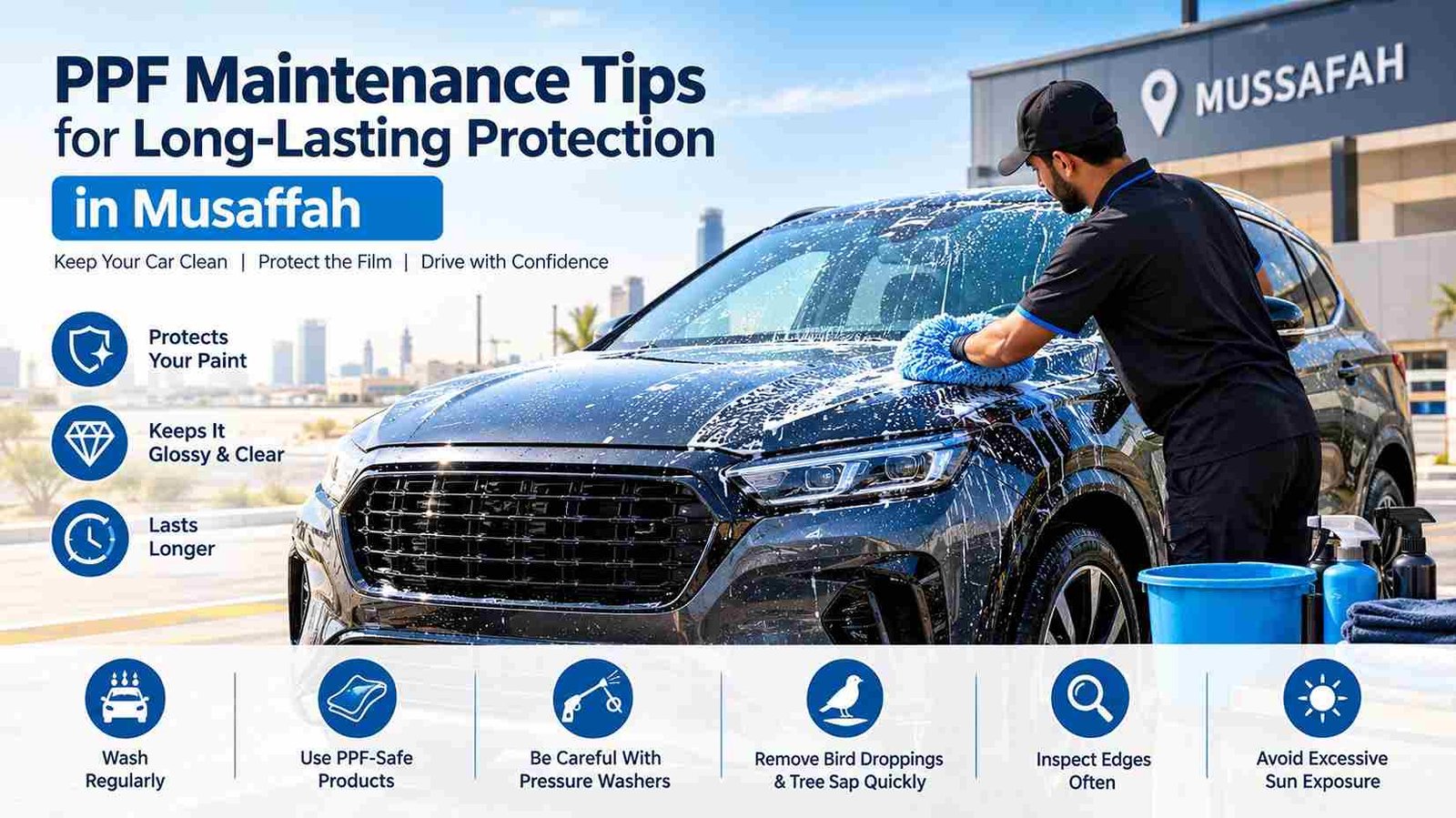
Tips to Maintain a Car After PPF Installation
1. Follow the Recommended Curing Time
After PPF installation, give the film enough time to properly bond with the vehicle’s surface. Avoid washing the car or touching the film edges during the period recommended by the installer.
Small water pockets or slight haziness may sometimes appear during the early curing stage. These can disappear naturally as the adhesive settles. Following the installer’s instructions during this period helps reduce the risk of lifting or movement.
2. Wash the Car Regularly
Regular washing prevents dust, sand, road grime, bird droppings, and other contaminants from staying on the film for too long.
For most vehicles, washing every one to two weeks is a practical routine. Cars that are frequently driven on highways or dusty roads may need more frequent cleaning.
Keeping the surface clean also makes it easier to notice changes in the film, such as lifting edges, stains, or scratches.
3. Use a Gentle Hand-Washing Method
A gentle hand wash is one of the safest ways to clean PPF. Use a clean microfiber wash mitt and a mild automotive shampoo that is suitable for paint protection film.
Start from the upper parts of the vehicle and work downward because the lower sections usually contain more dirt. Avoid rough brushes, dirty sponges, and materials that can drag sand across the film.
Even though PPF is designed to resist damage, unnecessary friction can create surface marks over time.
4. Rinse Sand and Dust Before Wiping
Never wipe heavy dust or sand from a dry PPF surface. Small particles can create friction between the towel and the film, leading to unnecessary surface marks.
This is particularly important after driving through dusty areas or during a sandstorm. Rinse the vehicle first to remove loose particles. Once most of the debris has been removed, continue with a gentle wash.
This simple habit can reduce the risk of creating swirl marks while cleaning the car.
5. Be Careful With Pressure Washers
Pressure washing can be used on a car with PPF, but the water should not be directed aggressively at the film edges.
High-pressure water can create problems around corners, seams, mirrors, and other areas where the film may have exposed edges. Keep the nozzle at a reasonable distance and avoid concentrating the spray on one section for too long.
If you are unsure about pressure washing, a normal hose and gentle hand wash provide a safer cleaning method.
6. Choose PPF-Safe Cleaning Products
Not every automotive cleaning product is suitable for PPF. Strong solvents, abrasive cleaners, and aggressive degreasers may affect the film’s surface or appearance when used incorrectly.
Choose products that are specifically described as safe for paint protection film or compatible with automotive protective films.
If you are unsure about a particular product, check the film manufacturer’s recommendations or ask the installer before using it.
7. Remove Bird Droppings and Tree Sap Quickly
Bird droppings, tree sap, insects, and similar contaminants should not be left on the film for extended periods.
These substances can become harder to remove when they dry. Instead of scraping them, soften the contamination with water or a PPF-safe cleaner. Then gently wipe the area with a clean microfiber towel.
Avoid using sharp objects or excessive pressure because they can damage the film’s surface.
8. Avoid Aggressive Polishing
PPF does not normally require aggressive polishing. Many modern films have a protective top layer and some also have self-healing properties that can help reduce minor surface marks.
Using abrasive compounds without confirming that they are safe for the film can damage the surface. If the film develops visible scratches or loses clarity, have it inspected before attempting any polishing or paint correction.
9. Check the Film Edges Regularly
Inspect the PPF edges every few months for signs of lifting, peeling, trapped dirt, bubbles, or cracks.
Pay particular attention to areas around the front bumper, mirrors, hood, fenders, and doors. These areas often receive more exposure to road debris and movement.
If a small section begins to lift, avoid pulling it yourself. Professional attention may help correct the problem before the lifting spreads.
10. Protect the Car From Excessive Sun Exposure
Quality PPF is designed to handle outdoor conditions, but constant exposure to strong UV rays and heat can contribute to long-term wear.
Whenever possible, park the car in a covered or shaded area. This can reduce heat buildup and unnecessary UV exposure.
Good parking habits are particularly useful in the UAE, where vehicles can spend long periods under strong sunlight.
What Should You Avoid When Cleaning PPF?
Knowing what not to do is just as important as knowing how to clean the film.
Avoid these common mistakes:
- Wiping heavy sand from a dry surface
- Using rough brushes
- Scrubbing the film aggressively
- Using abrasive compounds without checking compatibility
- Spraying high-pressure water directly at film edges
- Leaving bird droppings on the film for long periods
- Using strong chemicals without checking the manufacturer’s advice
- Pulling loose film edges
- Trying to repair deep cuts yourself
Most PPF maintenance problems can be reduced by using gentle cleaning methods and addressing small issues early.
How Often Should PPF Be Inspected?
A quick visual inspection can be done whenever you wash the car. Look for lifting, bubbles, cracks, deep scratches, stains, and changes in clarity.
A more detailed inspection can be useful every few months, especially for cars that are driven regularly on highways.
Pay extra attention to high-impact areas such as the front bumper, hood, front fenders, and side mirrors. Finding a small issue early can make it easier to correct.
Final Thoughts
Maintaining PPF does not require a complicated routine. Regular washing, gentle cleaning, suitable products, and quick removal of contaminants can help keep the film in good condition.
Drivers should also avoid wiping dry sand, using aggressive chemicals, or directing high-pressure water at film edges. Regular inspections are equally important because small problems such as lifting or cracking can become more noticeable if ignored.
With proper care, quality PPF can continue protecting the vehicle’s original paint while maintaining a clean and glossy appearance. Good maintenance not only helps the film last longer but also allows you to get more value from the protection you invested in.