Credit Card in UAE on 3500 Salary: What You Can Actually Get
Searching for a credit card in UAE on 3500 salary can quickly become confusing. You will find websites promising easy approval, cards with low salary requirements and even “instant” applications.
But there is an important detail that many of those pages leave out.
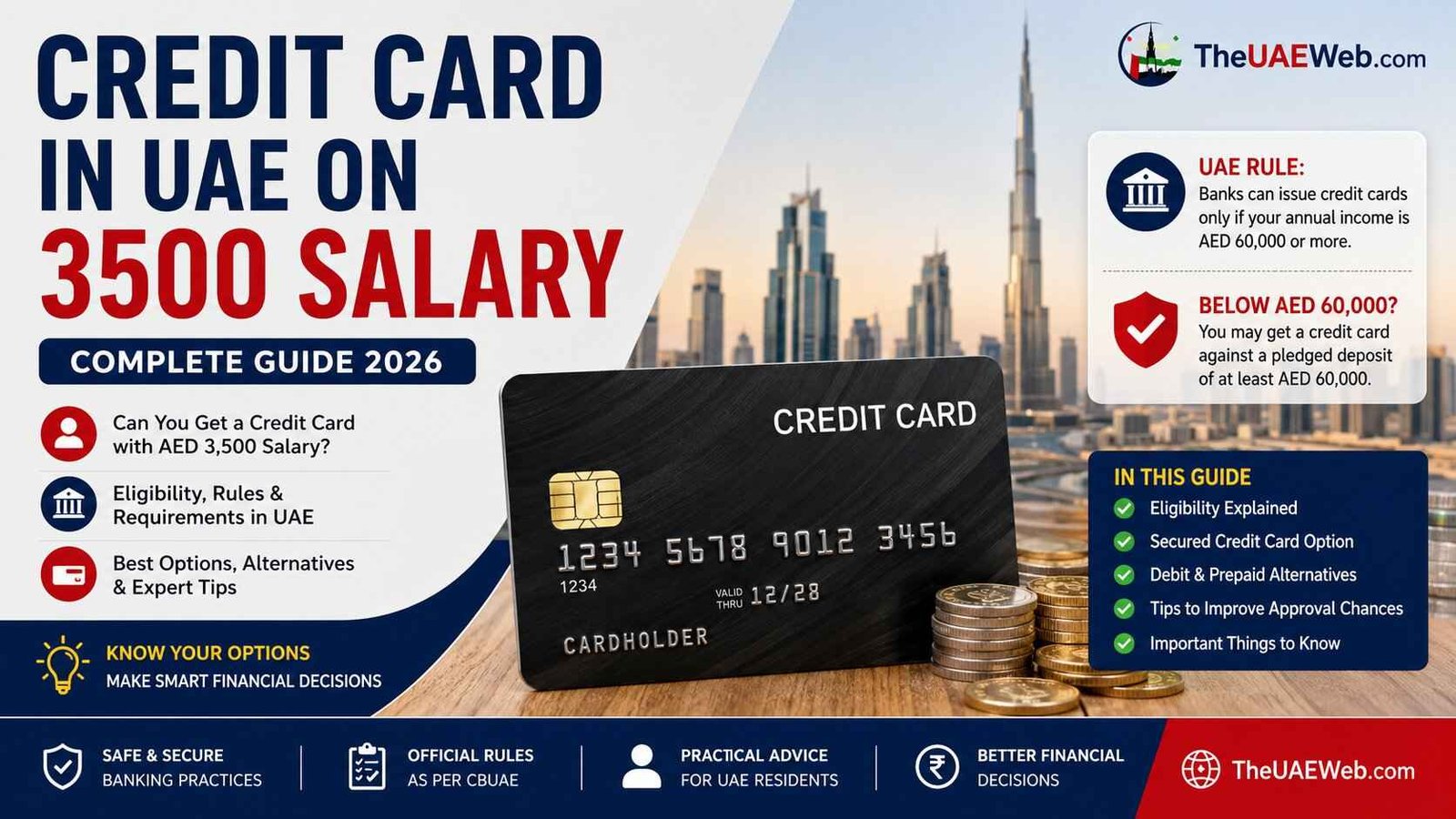
If your monthly salary is AED 3,500, your yearly income is AED 42,000. That is below the AED 60,000 annual income threshold stated in the Central Bank of the UAE’s credit-card rules for standard credit-card issuance.
That does not mean you have no card options in the UAE. It means you need to understand the difference between a normal unsecured credit card, a card backed by a deposit, and a debit or prepaid card.
Safety Note: Before applying for any credit card, check the bank’s current eligibility requirements and Key Facts Statement. Never pay an individual or unofficial agent to “guarantee” credit-card approval. The Central Bank of the UAE states that people below the required annual income may obtain a credit card against a pledged deposit of at least AED 60,000, subject to the applicable rules and bank approval.
Official information: Central Bank of the UAE – Credit Card Rules
Can You Get a Credit Card in UAE With AED 3,500 Salary?
For a normal unsecured credit card based on salary alone, AED 3,500 is below the CBUAE’s AED 60,000 annual income requirement.
AED 3,500 per month works out to:
AED 3,500 × 12 = AED 42,000 per year
That leaves a difference of AED 18,000 between your annual income and the AED 60,000 threshold.
The Central Bank rule says credit cards can be issued to people whose annual income is at least AED 60,000. It also provides for credit cards against a pledged deposit of at least AED 60,000 for people who do not meet that income requirement.
So if you are earning AED 3,500, applying for ordinary cards advertised with AED 5,000 or higher salary requirements is unlikely to solve the problem.
Read More: Credit Card in UAE on 3000 Salary
Why AED 3,500 Salary Makes Credit Card Approval Difficult
The issue is not simply whether you have a job.
A bank looks at your ability to handle additional credit. It can consider your income, existing liabilities, employment information and credit history when assessing an application.
The Central Bank’s responsible-financing requirements also require financial institutions to assess whether a customer can afford the credit and to examine credit records when making lending decisions.
This means having no existing loan does not automatically guarantee approval.
Your salary is only one part of the picture, but at AED 3,500 it is already below the stated annual-income threshold for standard credit-card issuance.
The AED 60,000 Rule Explained Simply
The number can sound confusing because banks usually advertise salaries on a monthly basis.
The Central Bank rule uses annual income.
The threshold is:
AED 60,000 per year
That is equivalent to:
AED 5,000 per month
So when you see many UAE credit cards requiring a minimum salary of AED 5,000, this is not just an arbitrary number appearing in bank advertisements.
It corresponds to the AED 60,000 annual income requirement in the CBUAE credit-card rules.
However, individual banks can impose additional eligibility requirements or set higher minimum salaries for particular cards.
For example, current ADCB credit-card pages show minimum salaries of AED 5,000 for several cards, subject to additional eligibility conditions.
Can You Get a Secured Credit Card With AED 3,500 Salary?
This is the option people often miss.
The CBUAE rules allow a credit card to be provided against a pledged deposit of at least AED 60,000 when the customer does not meet the AED 60,000 annual-income requirement.
In simple terms, instead of the bank relying only on your salary to support the card, you provide qualifying security in the form of a pledged deposit.
But there is an important point.
This does not mean you should simply deposit AED 60,000 with any bank and expect a card to be automatically approved.
The bank still has its own procedures, documentation, credit assessment and product terms.
Before placing any money, ask the bank specifically about its secured or deposit-backed credit-card facility, the required deposit, credit limit, fees and conditions for releasing the deposit.
What If You Do Not Have AED 60,000 for a Deposit?
Then a secured credit card may not be realistic.
That is where you should stop looking for “secret” AED 3,500 salary credit cards and consider another type of card.
A debit card can handle everyday purchases without borrowing money from the bank.
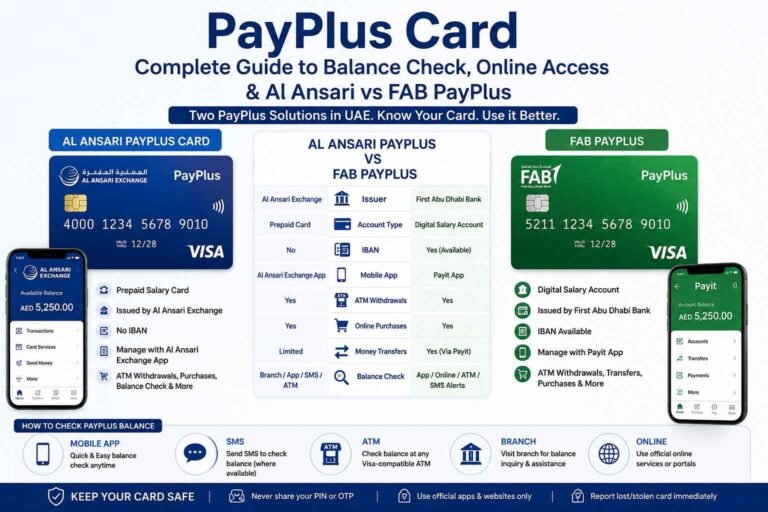
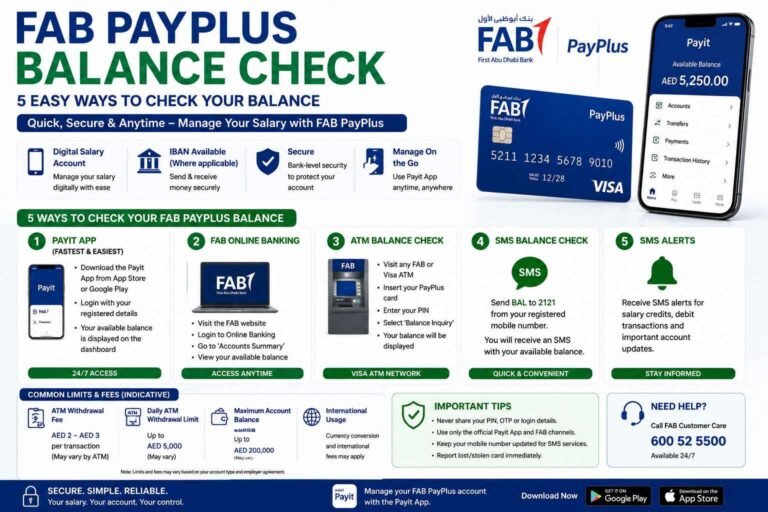
A prepaid card can also be useful when you need a card for online purchases, subscriptions or controlled spending without taking on conventional revolving credit.
These are not substitutes for a credit card in every situation, but they can solve the actual problem for many people.
If your main reason for wanting a credit card is simply to pay online, shop internationally or use contactless payments, you may not actually need credit.
Credit Card vs Debit Card on AED 3,500 Salary
The difference is straightforward.
With a debit card, you spend money that is already available in your account.
With a credit card, the bank gives you a credit facility that you later repay according to the card’s terms.
For someone earning AED 3,500, a debit card can be the safer everyday option if the goal is simply convenient payment.
You also avoid turning a tight monthly budget into a repayment problem.
What About Prepaid Cards?
A prepaid card can be useful when you want more control over spending.
You load money onto the card and use the available balance for purchases.
This can be particularly useful for online shopping or subscriptions where you do not want to expose your main account to every merchant.
But do not confuse a prepaid card with a credit card.
A prepaid card does not give you the same borrowing facility, credit limit or credit-card benefits.
If a website advertises a prepaid Visa or Mastercard as a “credit card for AED 3,500 salary,” read the product description carefully before applying.
Can a Bank Make an Exception for AED 3,500 Salary?
You should not assume that a bank can simply ignore the applicable regulatory requirements.
The Central Bank rules state that credit cards are provided to persons whose annual income equals or exceeds AED 60,000, while a pledged deposit of at least AED 60,000 is provided for in cases where the income requirement is not met.
A bank can also have stricter internal eligibility requirements.
That is why you may see different salary requirements between banks and between individual cards.
Do not rely on an advertisement saying “approval guaranteed.”
The final decision belongs to the issuing bank after it completes its required assessment.
What About a Credit Card With AED 3,500 Credit Limit?
This is another point that causes confusion.
A AED 3,500 credit limit is not the same thing as a AED 3,500 monthly salary.
For example, an ADCB Talabat credit-card page currently states a minimum salary of AED 5,000 or eligibility for a credit limit of at least AED 3,500.
That does not mean someone earning AED 3,500 automatically qualifies.
The AED 3,500 figure on that page refers to the credit limit, not the applicant’s monthly salary.
This distinction is extremely important when comparing UAE credit-card offers.
Can You Get a Credit Card If Your Salary Is AED 3,500 but You Have Other Income?
The CBUAE framework does not necessarily treat every case as salary alone.
Credit assessments can consider regular income from defined sources, and financial institutions are required to verify income and assess affordability.
If you have legitimate, documented regular income in addition to your salary, tell the bank about it.
Do not simply add occasional cash income to your application without documentation.
The bank may ask for evidence that the income is regular and reliable.
Does Salary Transfer Help?
Salary transfer can be useful for a banking relationship, but it does not automatically turn an AED 3,500 salary into an AED 5,000 salary.
Some banks offer credit cards to existing customers based on their overall relationship, but the applicable credit-card requirements still need to be met.
For example, current bank product pages continue to show specific minimum salary requirements for individual cards rather than a universal rule that existing customers automatically qualify.
If your employer pays your AED 3,500 salary into the same bank where you want a card, ask the bank directly about its current eligibility options.
What Documents May Be Needed?
If you eventually become eligible for a credit card, the bank may ask for documents such as:
- Emirates ID
- Passport and visa information where applicable
- Salary certificate
- Bank statements
- Employment details
- Existing liability information
The exact documents depend on the bank and card.
Do not submit unnecessary personal documents to unofficial agents or websites claiming they can guarantee approval.
Use the bank’s official application channel whenever possible.
What Happens When Your Salary Reaches AED 5,000?
This is where the situation changes.
At AED 5,000 per month, your annual income becomes:
AED 5,000 × 12 = AED 60,000
You then reach the annual income level specified in the CBUAE credit-card rule.
That does not mean every bank must approve you.
The bank can still assess your employment, credit history, existing liabilities, affordability and the specific card’s eligibility requirements.
But you will have crossed the basic income threshold that is preventing a standard credit-card application at AED 3,500.
Should You Apply to Several Banks at Once?
I would not recommend randomly submitting applications everywhere.
If you are currently earning AED 3,500, applying repeatedly for cards that require AED 5,000 or more is unlikely to solve the underlying eligibility problem.
Instead, first identify what you actually need.
If you need a card for everyday payments, look at debit or prepaid options.
If you specifically need borrowing facilities, ask banks about deposit-backed credit cards.
If your salary is likely to increase soon, waiting until your documented income reaches the required level may be simpler.
What About a Supplementary Credit Card?
A supplementary card is different from getting your own primary credit card.
A primary cardholder may be able to request an additional card for another person, subject to the bank’s rules.
If your family member already has an eligible credit card, ask that bank whether it offers supplementary cards and what conditions apply.
Do not assume that a supplementary card gives you the same independent borrowing relationship as having your own primary credit card.
Can an AED 3,500 Salary Support Credit Card Payments?
This is the question that matters more than approval.
Even if you find a way to obtain a card, you need to make sure the repayments fit comfortably into your monthly budget.
The CBUAE rules state that deductions for loans and credit-card facilities together must not exceed 50% of gross salary and regular income, subject to the applicable framework.
For an AED 3,500 salary, 50% would be:
AED 1,750
But that should not be interpreted as a recommended amount to spend.
A repayment technically within a regulatory limit can still be uncomfortable once rent, food, transport, utilities, family expenses and other commitments are considered.
A Better Approach for Someone Earning AED 3,500
If your salary is AED 3,500, think about the purpose behind the card.
If you want online payments, consider a debit or prepaid card.
If you want emergency borrowing, first build an emergency fund instead of relying on expensive revolving credit.
If you want credit history, use your existing financial products responsibly and avoid taking unnecessary debt simply to obtain a credit score.
If you specifically need a credit card, ask banks about a deposit-backed option and understand exactly how much money must be pledged.
If your salary is expected to increase to AED 5,000 or more, waiting may be the cleanest solution.
Why You Should Be Careful With “Easy Approval” Offers
A low-salary credit-card search attracts misleading advertisements because people are actively looking for a solution.
Be cautious if someone tells you:
“Guaranteed approval.”
“No salary documents required.”
“Credit card for AED 3,500 salary with instant approval.”
“Pay us first and we will arrange the card.”
A genuine bank may offer a legitimate product, but nobody outside the issuing institution should be able to guarantee that the bank will approve your application.
Never share your OTP, card PIN, online-banking password or full banking credentials with someone claiming to arrange a credit card.
Credit Card in UAE on 3500 Salary: The Practical Answer
If you earn AED 3,500 per month, your annual income is AED 42,000.
That is below the CBUAE’s stated AED 60,000 annual income requirement for credit-card issuance.
So the realistic options are not a mysterious list of ordinary unsecured cards that magically accept a AED 3,500 salary.
Your practical choices are:
Option 1: Use a debit card for normal spending.
Option 2: Consider a prepaid card when you need controlled card payments.
Option 3: Ask a bank about a deposit-backed credit card if you can meet the required pledged-deposit conditions.
Option 4: Wait until your documented income reaches the applicable threshold and then compare genuine credit-card products.
The important thing is not simply getting a credit card.
It is getting a payment method that you can comfortably manage.
Frequently Asked Questions
Can I get a credit card in UAE with AED 3,500 salary?
A standard unsecured credit card based on salary alone is generally not available at this income level because AED 3,500 per month equals AED 42,000 annually, below the CBUAE’s AED 60,000 annual income requirement. A pledged-deposit route is provided for under the CBUAE rules.
What is the minimum salary for a credit card in UAE?
The CBUAE credit-card rule specifies annual income of at least AED 60,000, equivalent to AED 5,000 per month if income is received evenly across 12 months. Individual banks and cards can set additional or higher requirements.
Can I get a credit card with AED 3,500 salary and no deposit?
For a standard unsecured card, your AED 42,000 annual salary is below the CBUAE’s AED 60,000 annual income requirement.
Can I get a secured credit card with AED 3,500 salary?
The CBUAE rules provide for credit cards against a pledged deposit of at least AED 60,000 for people who do not meet the annual income requirement. The bank’s own approval and conditions still apply.
Is AED 3,500 credit limit the same as AED 3,500 salary?
No. A credit limit is the amount the bank allows you to borrow on the card. Salary is your income. Some bank advertisements mention a AED 3,500 credit-limit condition, but that does not mean the applicant earns AED 3,500 per month.
What can I use instead of a credit card on AED 3,500 salary?
A debit card or prepaid card can handle many everyday payment needs without requiring conventional credit. If you specifically need a credit facility, ask banks about deposit-backed options.
Can salary transfer help me get a credit card?
Salary transfer can strengthen your relationship with a bank, but it does not automatically remove the applicable income and eligibility requirements for a credit card.
Should I apply for several credit cards after earning AED 3,500?
It is better to check the eligibility requirements first. Applying for cards that clearly require AED 5,000 or more is unlikely to solve the issue.
What should I do if my salary becomes AED 5,000?
Once your documented income reaches AED 5,000 per month, you reach AED 60,000 annual income. You can then compare cards for which you meet the bank’s other eligibility requirements, rather than applying randomly.
Final Thought
A credit card in UAE on 3500 salary is not impossible in every circumstance, but it is not as straightforward as many online advertisements make it sound.
At AED 3,500, the most important number is not the advertised card limit. It is your annual income of AED 42,000 compared with the CBUAE’s AED 60,000 credit-card income threshold.
If you need a card today, look at the problem you are actually trying to solve. A debit or prepaid card may be enough. If you specifically need credit, investigate a legitimate deposit-backed option directly with a bank.
And when your income reaches AED 5,000 or more, you will have a much wider range of conventional credit-card products to compare.
TheUAEWeb.com will continue to focus on the practical side of UAE banking and personal finance — not just telling you which product exists, but explaining whether you can realistically use it.