
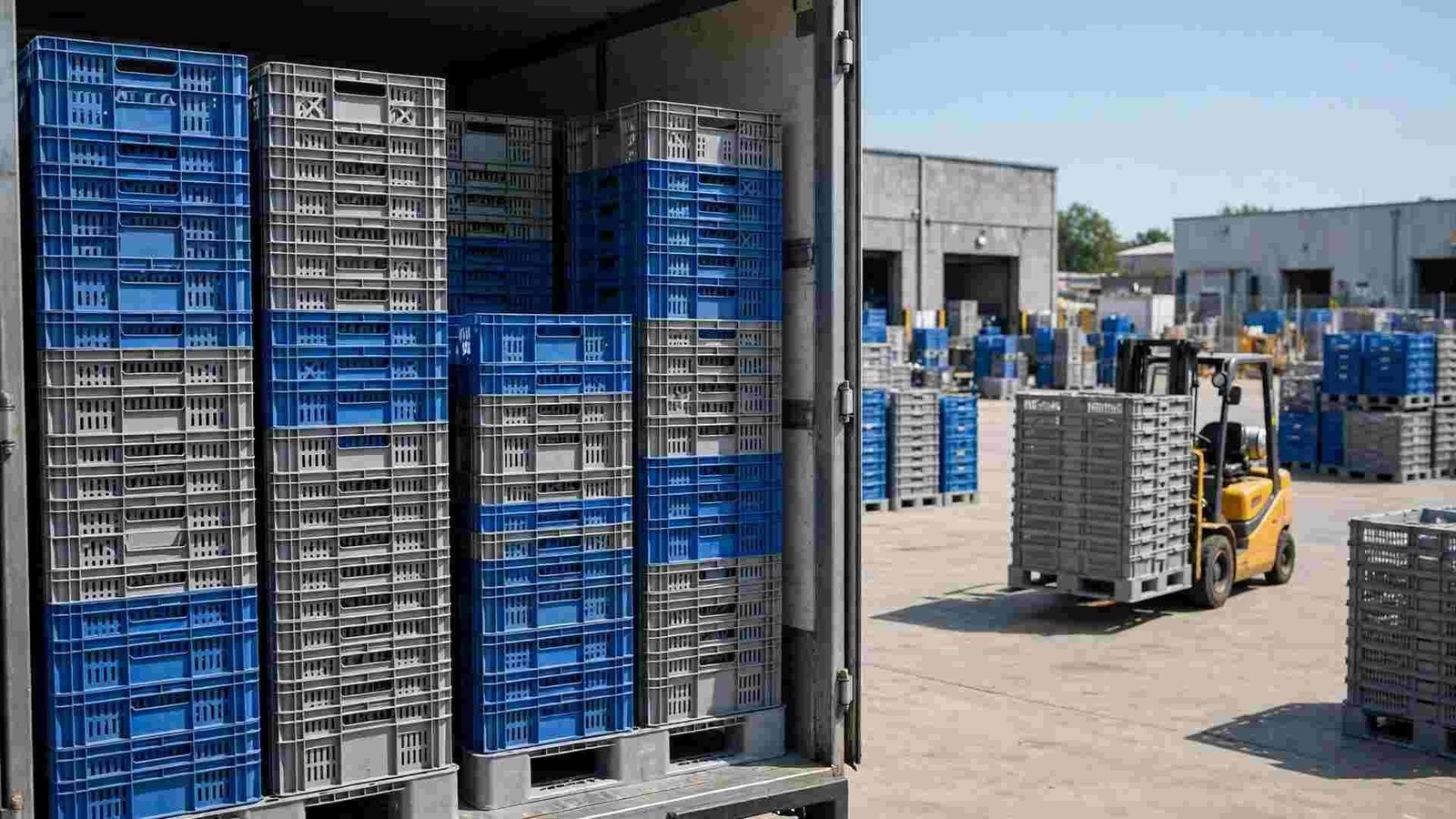
What Makes Returnable Transport Packaging Practical for Regional Distribution Networks?
Regional distribution networks depend on the regular movement of goods between manufacturers, warehouses, retailers, and other business locations. To keep deliveries running smoothly, companies need packaging that protects products, supports efficient handling, and controls operating costs.
Returnable transport packaging can help meet these needs by allowing businesses to reuse crates, boxes, pallets, and containers across multiple delivery cycles. Unlike single-use packaging, returnable packaging is designed to travel through a supply chain, return to a collection point, and be used again.
When businesses organise collection, inspection, cleaning, and redistribution properly, this approach can reduce packaging waste and make repeated shipments easier to manage.
Key Factors That Make Returnable Transport Packaging Practical
1. Lower Packaging Costs Over Repeated Deliveries
Single-use packaging creates a recurring purchasing requirement. Businesses must continually buy new boxes, cartons, or other materials to replace those used for previous deliveries. Returnable packaging changes this pattern by spreading the purchase cost of each item across multiple trips.
For example, a distributor supplying several retail outlets may reuse the same crates for regular deliveries throughout the week. If the crates remain in good condition and return on schedule, the business may need fewer replacement packaging items over time.
2. Better Protection for Goods During Transport
Products can be damaged when packaging bends, tears, becomes wet, or fails under stacked loads. Returnable packaging is often designed for repeated handling, which can provide more consistent protection during regular distribution activities.
Rigid crates and boxes can help keep products contained and organised during loading, unloading, and warehouse storage. Suitable designs may reduce movement inside the packaging and make loads easier to stack securely.
3. Easier Handling at Warehouses and Delivery Points
Regional distribution centres often process large numbers of items within limited timeframes. Packaging that fits standard handling equipment and follows consistent dimensions can make these operations more organised.
Reusable crates can help workers group products into manageable units. Standardised sizes may simplify stacking, storage, loading, and movement between delivery vehicles and warehouse areas. Compatible designs can also support pallet-based handling and reduce the need to rearrange goods at every stage.
4. More Efficient Use of Vehicle Space
Transport costs are affected by how efficiently a vehicle uses its available space. Packaging that stacks securely can help businesses organise loads and use vehicle capacity more effectively.
Returnable crates with consistent dimensions may be easier to arrange than a mixture of irregular cartons and containers. Some reusable designs can be nested or collapsed when empty, reducing the space needed to transport them back to a warehouse or supplier.
5. Reduced Packaging Waste
Businesses that regularly ship products can generate substantial amounts of disposable packaging. Reusing suitable containers can reduce the need to discard and replace packaging after every delivery.
A returnable system gives packaging a longer working life, provided items are collected, inspected, cleaned where necessary, and returned to service. This can help reduce waste from repeated shipments and support more efficient use of packaging materials.
6. Easier Stock Control and Traceability
Returnable packaging is an asset that moves between different locations. Without a tracking process, crates and containers can become misplaced, remain unused at customer sites, or be returned in insufficient quantities.
A simple inventory system can record how many packaging items are issued, delivered, collected, inspected, and available for reuse. Businesses with high volumes may use barcodes, QR codes, or other tracking tools to monitor movement across their regional network.
Clear records help managers identify shortages before they affect deliveries. They can also show which locations regularly hold empty packaging and where collection arrangements need improvement.
7. Suitable Packaging for Different Products
Regional distributors often handle products with different sizes, weights, and storage requirements. A practical returnable packaging system should offer formats that suit the goods being moved.
For instance, stackable crates may work well for groceries, produce, and general merchandise. Smaller containers may suit components and spare parts, while larger boxes can accommodate bulkier goods. Ventilation, handles, lids, internal dividers, and stacking features can make certain designs more suitable for specific tasks.
Businesses sourcing reusable packaging can explore options from a plastic crates supplier in Dubai, such as Crateco Pack LLC, when comparing packaging solutions for distribution operations.
8. A Clear Process for Collecting Empty Packaging
A returnable system depends on getting empty packaging back. If crates remain at customer sites or collection schedules are inconsistent, the business may need to buy extra stock to maintain deliveries.
Companies should decide how packaging will be collected and where it will be returned. Options include collecting empty crates during the next delivery, arranging scheduled pickups, or using a central collection point for several nearby customers.
The process should be simple for both the distributor and the recipient. Staff should know how to separate empty packaging, where to store it temporarily, and when collection is expected.
How Can Businesses Decide Whether Returnable Packaging Is Worth Using?
Before changing their packaging system, businesses should review the full operating process rather than focusing only on the purchase price of a container.
The following factors can help guide the decision:
| Factor | What to evaluate |
| Delivery frequency | How often goods travel between the same locations |
| Return rate | The percentage of packaging items collected and reused |
| Transport costs | The cost of delivering full packaging and returning empty items |
| Packaging lifespan | How many trips containers can complete in suitable condition |
| Cleaning and repair | The resources required between uses |
| Storage capacity | Space available for full and empty packaging |
| Product requirements | Protection, ventilation, hygiene, and load capacity |
| Tracking process | How packaging movement and losses will be recorded |
A trial across a small group of routes can help businesses understand how the system performs before expanding it. During the trial, managers can measure return rates, packaging losses, damage, cleaning costs, and total cost per delivery.
Conclusion
Returnable transport packaging can be practical for regional distribution networks when businesses have frequent delivery routes, suitable products, reliable collection arrangements, and a clear system for managing reusable assets.
Durable crates, boxes, and containers can help protect goods, simplify handling, improve stock control, and reduce the need for repeated packaging purchases.
The key is to manage the complete cycle, from dispatch and delivery to collection, inspection, cleaning, and reuse. By measuring return rates and total operating costs, businesses can identify where reusable packaging provides real value and build a distribution system that is more organised and efficient. visit Theuaeweb.com for more nformations like this.