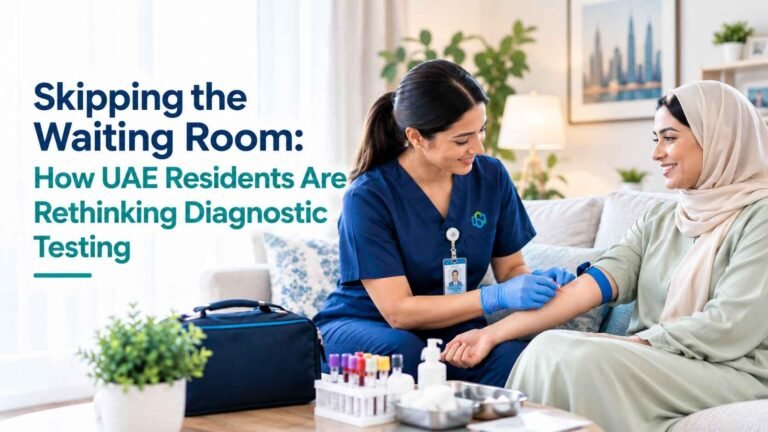

Why More UAE Residents Are Skipping the Clinic for STD Testing
A quiet shift is taking place in how people across the UAE approach sexual health — and it’s happening far from any waiting room.
For years, getting tested for a sexually transmitted infection meant the same routine: book a clinic appointment, sit in a shared waiting area, and hope no one you know walks in. That routine kept a lot of people from testing altogether. Today, a growing number of residents are choosing a different path entirely, one built around privacy and convenience instead of queues and stigma, and the shift toward an at-home std test is one of the clearest signs of how healthcare habits are changing across the region.
A Cultural Shift, Not Just a Convenience
The UAE is a place where discretion matters, and that’s true well beyond sexual health. People here value privacy in how they bank, how they shop, and increasingly, how they manage their medical needs. So when home-based diagnostic services started appearing as a mainstream option rather than a niche one, uptake was fast. It wasn’t just about saving a trip to a clinic — it was about removing the emotional friction that keeps people from testing in the first place. That friction is exactly what std test at home services were designed to solve.
The Stigma Barrier Is Real
Even in a modern, cosmopolitan city like Dubai, conversations about sexual health can still feel loaded. Many people delay testing not because they don’t care about their health, but because they’re uncomfortable with the visibility of a clinic visit — the receptionist who might recognize them, the waiting room full of strangers, the questions asked out loud. Home testing removes almost all of that. A nurse arrives, collects the sample privately, and leaves. There’s no audience, no small talk, and no risk of an awkward encounter with someone you know.
Busy Lifestyles Are Accelerating the Trend
Dubai runs on long work hours and tight schedules, and healthcare has had to adapt to that pace. Booking a clinic appointment often means blocking out half a day between travel, waiting time, and the actual visit. Home-based services flip that equation. A test that once required rearranging your afternoon can now happen in a fifteen-minute window at your own address, on your own schedule, without disrupting your day at all.
What’s Actually Driving the Demand
A few overlapping factors explain why this trend has accelerated rather than plateaued. First, DHA-licensed providers have made home collection just as clinically rigorous as an in-clinic visit, which removed the biggest objection people had — the assumption that home testing must be less accurate. Second, results are now delivered digitally and securely, so there’s no need to return anywhere to collect a report. Third, and perhaps most importantly, testing has become normalized as a routine part of general wellness rather than something reserved for when symptoms appear.
That normalization matters. Many providers now bundle sexual health screening alongside broader diagnostic panels, treating it as one part of a complete health check rather than an isolated, uncomfortable errand. It’s common now to see a lab test at home visit cover general bloodwork, vitamin panels, and STD screening in a single appointment, which quietly removes the sense that this is a “special” or singled-out test at all.
How the Process Actually Works
The logistics are simpler than most people expect. A quick call or online booking confirms which test panel you need — anything from a focused screen for one or two infections to a comprehensive panel covering a dozen or more. A licensed nurse arrives at the scheduled time, collects a blood, urine, or swab sample depending on the panel, and transports it to an accredited lab under the same protocols used for clinic-collected samples. Nothing about the clinical process is shortened or simplified just because the location has changed.
Here’s a simple breakdown of how the two approaches typically compare:
| Factor | Traditional Clinic Visit | Home-Based Testing |
| Time required | Travel, waiting, appointment | Single scheduled slot at home |
| Privacy | Shared waiting areas | One-on-one, private setting |
| Emotional comfort | Can feel exposed or judged | Discreet, no public visibility |
| Lab standards | Certified lab processing | Same certified lab processing |
| Result delivery | In-person or portal pickup | Secure digital delivery |
The table makes the core point clear: the clinical rigor hasn’t changed, but almost everything around the experience has been redesigned for comfort and discretion.
Who’s Choosing This Option
It isn’t just one type of person driving the trend. Young professionals with demanding jobs, couples who want to test together before a new stage in their relationship, and even long-term residents who simply prefer not to sit in a clinic are all part of the same shift. What connects them isn’t a single motivation but a shared preference for handling something personal on their own terms. For many, testing regularly — every six to twelve months, as most doctors recommend for sexually active adults — only became realistic once the process stopped feeling like an event.
There’s also a growing awareness that many infections show no early symptoms at all, which means regular testing is the only reliable way to catch something before it becomes a bigger issue. That awareness, paired with a testing method that finally feels approachable, is pushing more people to treat screening as routine rather than reactive.
What This Shift Says About UAE Healthcare
The move away from clinics for something as sensitive as STD testing reflects a broader pattern in how healthcare is evolving across the region. Patients increasingly expect medical services to meet them where they are, both literally and emotionally, rather than asking them to adapt to a system built around institutional convenience. As more residents experience how straightforward and private home testing can be, it’s likely to become the default choice rather than the alternative one — not because clinics have failed, but because home-based care finally offers something clinics structurally can’t: complete discretion without compromise.
Safety Note: TheUAEWeb.com is an informational platform and does not provide medical advice. STD testing and treatment should be discussed with a qualified, licensed healthcare professional. Follow the test provider’s instructions and seek medical care for symptoms or concerns.