
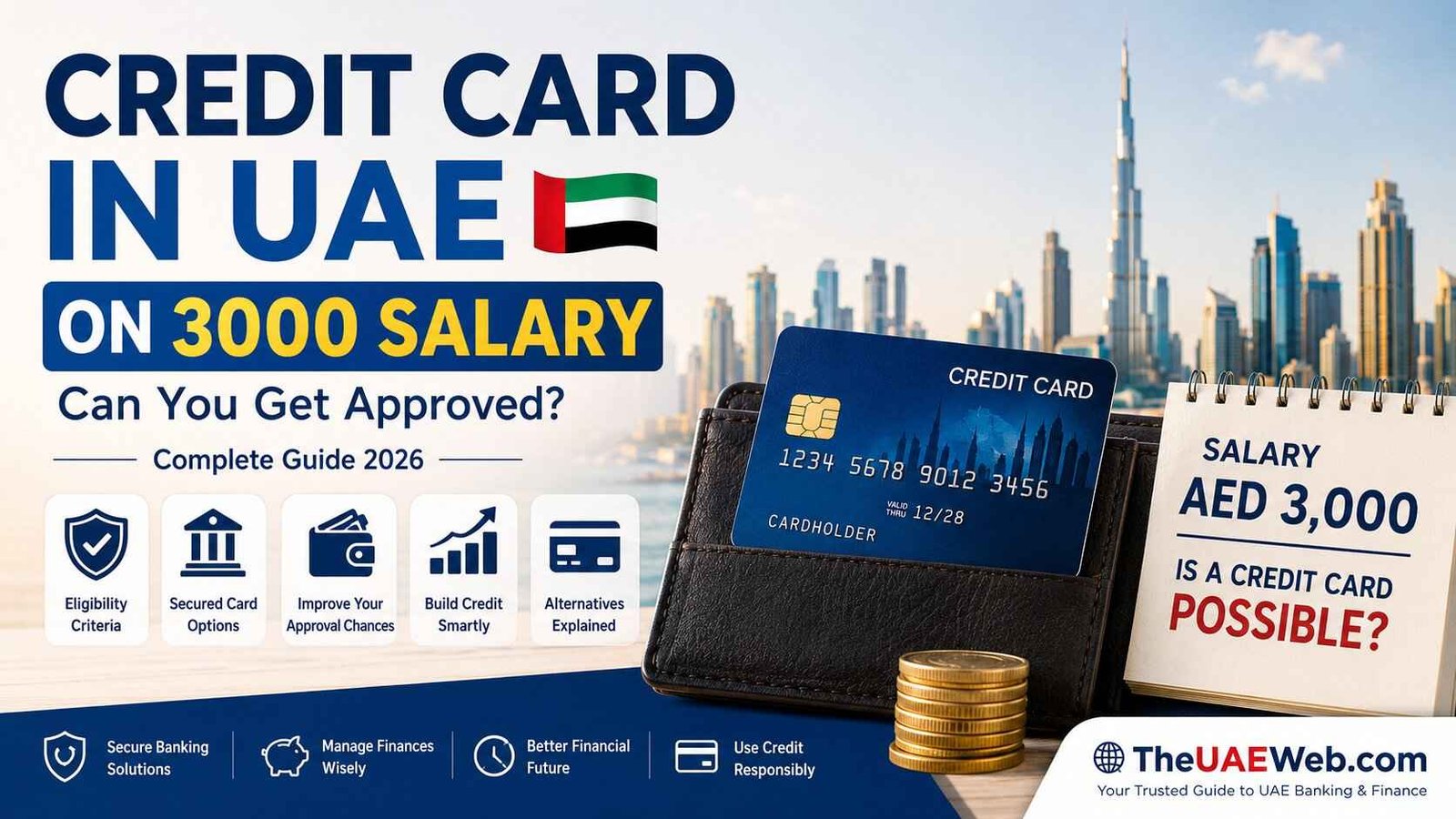
Credit Card in UAE on 3000 Salary: Complete Guide to Eligibility, Approval & Alternatives (2026)
Getting a credit card in UAE on 3000 salary is one of the most searched banking topics among employees working in the private sector. Many residents earning AED 3,000 per month want to build their credit history, shop online, earn cashback, book flights, or simply have access to emergency funds. However, qualifying for a traditional unsecured credit card can be challenging because most UAE banks set minimum income requirements based on their lending policies and risk assessment.
That doesn’t necessarily mean obtaining a credit card is impossible. Your monthly salary is only one part of the approval process. Banks also review factors such as employment stability, employer profile, salary transfer, existing loans, credit history, repayment capacity, and your overall financial relationship with the bank.
For applicants earning AED 3,000, understanding how banks assess creditworthiness is far more valuable than submitting multiple applications that may be rejected. By taking the right approach, improving your financial profile, and considering suitable alternatives, you can increase your chances of accessing credit in the future.
This guide on Theuaeweb.com explains everything you need to know about getting a credit card in UAE on a 3000 salary, including eligibility requirements, why many applications are declined, secured credit cards, salary transfer, alternative financial products, common mistakes, and practical tips to improve your approval chances.
Quick Answer
Most UAE banks require a monthly salary of around AED 5,000 or higher for standard unsecured credit cards. If you earn AED 3,000, approval for a regular credit card is generally limited, but you may still have options such as secured credit cards backed by a fixed deposit or other financial products, depending on the bank’s policies and your financial profile.
Can You Get a Credit Card in UAE on 3000 Salary?
The short answer is yes, but with limitations.
Most traditional credit cards in the UAE are designed for customers who meet the bank’s minimum salary requirements. Since many entry-level cards require salaries starting from approximately AED 5,000, applicants earning AED 3,000 may not qualify for standard unsecured cards.
However, banks do not evaluate salary alone.
They may also consider:
- Length of employment
- Salary transfer history
- Employer category
- Existing banking relationship
- Credit history
- Outstanding liabilities
- Overall repayment capacity
Applicants with stable employment and a strong financial record generally have better long-term prospects than those who repeatedly submit applications without meeting basic eligibility requirements.
Understanding How Credit Card Approval Works
Many people believe banks approve or reject applications based solely on salary. In reality, the decision is based on a broader risk assessment.
Banks evaluate whether an applicant is likely to repay borrowed money responsibly.
Some of the factors commonly considered include:
| Evaluation Factor | Why It Matters |
|---|---|
| Monthly salary | Determines repayment capacity |
| Employment stability | Shows consistent income |
| Employer profile | Indicates job reliability |
| Credit history | Reflects previous borrowing behaviour |
| Existing loans | Measures financial obligations |
| Salary transfer | Demonstrates income consistency |
| Banking relationship | Shows customer history with the bank |
| Debt Burden Ratio | Assesses affordability |
Salary is often the first requirement, but it is not the only one.
Why Most Banks Require Higher Salaries
Banks issue unsecured credit cards without requiring collateral. This means the bank assumes the financial risk if the customer cannot repay outstanding balances.
To reduce that risk, most banks establish minimum income requirements.
Higher salaries generally indicate:
- Greater repayment ability
- Lower financial risk
- Better debt management
- Increased financial stability
Applicants earning AED 3,000 often spend a significant portion of their income on housing, transportation, groceries, and daily living expenses.
As a result, banks may determine that there is limited capacity to comfortably manage additional credit obligations.
What Happens If You Apply Without Meeting the Minimum Salary?
Many applicants assume there is no downside to “trying their luck.”
Unfortunately, repeated applications can sometimes do more harm than good.
Possible consequences include:
- Credit enquiries recorded on your profile
- Multiple application rejections
- Reduced confidence from future lenders
- Lower approval chances for subsequent applications
Rather than applying repeatedly, it is generally more effective to strengthen your financial profile before submitting an application.
Typical Minimum Salary Requirements
Salary requirements vary depending on the bank and the type of credit card.
| Credit Card Type | Typical Salary Requirement |
|---|---|
| Entry-level cards | Around AED 5,000 |
| Cashback cards | AED 5,000–8,000+ |
| Travel cards | AED 8,000–15,000+ |
| Premium cards | AED 15,000 and above |
| Infinite or Signature cards | Higher income requirements |
These figures are general market observations and individual banks may have different eligibility criteria.
Credit Card Options for AED 3,000 Salary
Although standard credit cards may be difficult to obtain, there are still practical alternatives.
Some possible options include:
- Secured credit cards
- Building a relationship with your salary bank
- Waiting until your salary increases
- Improving your credit profile
- Using prepaid payment cards
- Exploring Buy Now, Pay Later (BNPL) like Tabby, tamara services where appropriate
These options allow customers to build financial discipline while preparing for future eligibility.
Secured Credit Cards: A Practical Option for AED 3,000 Salary Earners
If you earn AED 3,000 per month, a secured credit card may be one of the most realistic ways to access credit while building your financial history.
Unlike a traditional credit card, a secured credit card requires you to place a refundable fixed deposit with the bank. This deposit acts as security for the credit limit, reducing the bank’s lending risk.
For example, if you place a qualifying deposit, the bank may issue a credit card with a limit linked to that amount, subject to its policies.
Benefits of a Secured Credit Card
- Easier approval than unsecured cards
- Helps build a positive credit history
- Accepted for online shopping
- Can be used internationally where supported
- Useful for hotel and travel bookings
- Often includes contactless payments
Many customers eventually upgrade to a standard credit card after demonstrating responsible repayment habits.
Why Salary Transfer Can Improve Eligibility
Many UAE banks prefer applicants whose salaries are transferred directly into an account with the same bank.
Salary transfer gives banks greater confidence because they can verify:
- Monthly income
- Employment stability
- Payment consistency
- Account activity
- Cash flow patterns
Having your salary transferred does not guarantee approval, but it may improve your overall banking relationship and make you eligible for products that match your financial profile.
Documents Usually Required
Requirements differ from bank to bank, but applicants are commonly asked to provide:
| Document | Purpose |
|---|---|
| Emirates ID | Identity verification |
| Passport copy | Personal identification |
| Valid UAE residence visa | Residency confirmation |
| Salary certificate | Income verification |
| Recent salary slips | Proof of earnings |
| Bank statements | Financial assessment |
| Employer letter (if requested) | Employment confirmation |
Some banks may request additional documents depending on the applicant’s profession, employer, or account type.
Factors That Improve Your Approval Chances
Even if your current salary is AED 3,000, improving your financial profile can make future applications stronger.
Maintain Stable Employment
Banks generally prefer applicants who have worked with the same employer for several months or longer. Frequent job changes may affect eligibility.
Build a Good Banking Relationship
Using the same bank for salary deposits, savings, and everyday transactions demonstrates financial consistency.
Keep Existing Loans Under Control
If you already have personal loans or financing, ensure repayments are made on time. High monthly obligations can reduce your borrowing capacity.
Maintain a Positive Credit History
Always pay existing financial commitments before their due dates. A good repayment record can improve your future creditworthiness.
Avoid Multiple Applications
Submitting applications to several banks within a short period can negatively affect your financial profile. Research eligibility requirements before applying.
Common Reasons Credit Card Applications Are Rejected
Understanding why applications are declined can help you avoid unnecessary rejections.
Some common reasons include:
- Monthly salary below the bank’s minimum requirement
- Short employment history
- High existing debt
- Poor repayment history
- Incomplete documentation
- Employer not meeting the bank’s approved criteria
- Multiple recent credit applications
- Insufficient banking relationship
Being declined once does not mean you will always be ineligible. Improving your financial profile over time can increase your chances.
Common Mistakes to Avoid
Many applicants unknowingly reduce their approval chances by making avoidable mistakes.
Avoid the following:
- Applying without checking salary eligibility
- Applying to multiple banks simultaneously
- Providing incomplete documents
- Missing loan or bill payments
- Ignoring your existing debt obligations
- Closing your salary account shortly before applying
- Assuming every bank has identical eligibility requirements
Planning your application carefully is usually more effective than applying repeatedly.
Alternatives to Credit Cards
If a traditional credit card isn’t currently available, there are several alternatives that can still help you manage your finances.
Prepaid Cards
Prepaid cards allow you to load your own money before spending. Since they do not involve borrowing, they can be useful for budgeting and online purchases.
Debit Cards
Most UAE bank accounts include a debit card that can be used for shopping, ATM withdrawals, and online payments where supported.
Buy Now, Pay Later (BNPL)
Some merchants and financial service providers offer Buy Now, Pay Later options for eligible customers. Approval criteria vary, and users should understand the repayment terms before using these services.
Savings Before Borrowing
Building an emergency savings fund can reduce the need for short-term borrowing and improve your financial stability.
Advantages of Having a Credit Card
When used responsibly, a credit card offers several benefits.
These may include:
- Cashless payments
- Online shopping convenience
- Emergency financial support
- Reward programmes
- Cashback offers
- Travel benefits on eligible cards
- Purchase protection (where available)
- Easier hotel and car rental bookings
However, these benefits only apply when balances are managed responsibly and payments are made on time.
Things to Consider Before Applying
Before submitting any application, ask yourself:
- Does my salary meet the bank’s minimum requirement?
- Have I been employed long enough?
- Is my salary transferred to a UAE bank?
- Do I have outstanding debts?
- Can I comfortably repay monthly credit card bills?
- Have I reviewed the bank’s eligibility criteria?
Answering these questions honestly can help you avoid unnecessary rejections.
How to Improve Your Chances of Getting a Credit Card in the Future
If you’re currently earning AED 3,000 and don’t qualify for most unsecured credit cards, there are practical steps you can take to improve your eligibility over time.
Increase Your Monthly Income
Many banks offer entry-level credit cards once customers meet their minimum salary requirements. A salary increment or promotion may significantly expand your options.
Build a Positive Credit History
Pay all your existing financial obligations on time, including:
- Personal loans
- Auto loans
- Utility bills
- Mobile postpaid bills
- Existing financing
Responsible financial behaviour helps establish a stronger credit profile.
Maintain Long-Term Employment
Banks generally prefer applicants with stable employment rather than frequent job changes. A consistent employment history demonstrates reliable income.
Keep Your Debt Low
If a large portion of your salary already goes toward loan repayments, your borrowing capacity may be reduced. Keeping your debt burden manageable can improve future approval chances.
Build Savings
Maintaining savings shows financial discipline. It can also help if you later decide to apply for a secured credit card backed by a fixed deposit.
Is a Credit Card the Right Choice on a AED 3,000 Salary?
A credit card can be useful, but it is not always the best financial tool for everyone.
Before applying, consider whether you can comfortably repay the full outstanding balance every month. Using credit responsibly is far more important than simply qualifying for a card.
If your monthly budget is already tight after paying rent, transportation, groceries, and other living expenses, it may be better to strengthen your financial position before taking on additional credit.
Tips for Responsible Credit Card Use
If you are approved for a credit card now or in the future, following good financial habits will help you avoid unnecessary debt.
Always remember to:
- Pay your bill before the due date.
- Try to pay the full outstanding balance each month.
- Avoid using your full credit limit.
- Monitor transactions regularly.
- Enable transaction alerts.
- Report suspicious activity immediately.
- Never share your PIN or One-Time Password (OTP).
- Review your monthly statement carefully.
Responsible usage not only helps avoid late payment charges but also builds a stronger credit history for future financial products.
People Also Ask
Can I get a credit card in the UAE with a AED 3,000 salary?
It is possible in some situations, but most UAE banks require a higher minimum salary for standard unsecured credit cards. Applicants earning AED 3,000 may have better chances with secured credit cards or by improving their overall financial profile before applying.
Which banks offer credit cards for AED 3,000 salary in the UAE?
Eligibility requirements differ between banks and can change over time. Instead of focusing on a specific bank, applicants should review each bank’s latest salary requirements and eligibility criteria before submitting an application.
What is a secured credit card?
A secured credit card is backed by a refundable fixed deposit held with the bank. Because the deposit reduces the bank’s lending risk, approval may be easier than for an unsecured credit card, subject to the bank’s policies.
Does salary transfer increase my approval chances?
Salary transfer does not guarantee approval, but many banks view salary-transferred customers more favorably because they can verify income and account activity more easily.
Can I apply for multiple credit cards at the same time?
It is generally not recommended. Multiple applications within a short period may result in several credit enquiries and reduce your chances of approval.
What documents are required for a UAE credit card?
Banks commonly request an Emirates ID, passport copy, valid UAE residence visa, salary certificate, recent salary slips, and bank statements. Additional documents may be required depending on the bank’s internal policies.
Can expatriates apply for a credit card in the UAE?
Yes. Eligible expatriates with valid residency status, qualifying income, and the required documentation can apply, subject to the bank’s approval criteria.
Can I use a debit card instead of a credit card?
Yes. A debit card allows you to make purchases using the money available in your bank account. Unlike a credit card, it does not involve borrowing funds from the bank.
Does having a good credit history matter?
Absolutely. A strong repayment history is one of the most important factors banks consider when evaluating future credit applications.
What should I do if my application is rejected?
Avoid submitting another application immediately. Instead, identify the possible reason for the rejection, improve your financial profile, reduce outstanding debt if applicable, and apply again only when you meet the eligibility requirements.
Conclusion
Getting a credit card in UAE on a 3000 salary can be challenging because many banks have minimum salary requirements for unsecured cards. However, salary is only one part of the approval process. Employment stability, credit history, salary transfer, existing financial commitments, and your overall relationship with the bank all play an important role.
If you do not currently qualify for a standard credit card, consider alternatives such as secured credit cards, prepaid cards, or improving your financial profile before applying again. Taking the time to build a strong banking history can significantly increase your chances of approval in the future while helping you manage credit responsibly.
For more practical UAE banking, personal finance, and credit card guides, keep exploring TheUAEWeb.com, where we publish reliable, easy-to-understand information designed to help UAE residents make smarter financial decisions.
Safety Note: TheUAEWeb.com is an independent informational website and is not affiliated with any bank or financial institution in the UAE. Approval criteria, salary requirements, credit limits, fees, and eligibility policies vary between banks and may change over time. Never share your PIN, One-Time Password (OTP), online banking credentials, or credit card details with anyone. Always verify product information directly with the relevant bank before applying for any financial product.

One Comment